
Studying in the UK is an exciting opportunity for Indian students, but tuition fees, accommodation, travel, and living expenses can make it a significant financial investment.
The good news is that Indian students can explore a wide range of UK scholarships, including government-funded programmes, university scholarships, and other financial awards. Depending on the programme, scholarships may provide full financial support, partial tuition fee reductions, or assistance with specific study-related expenses.
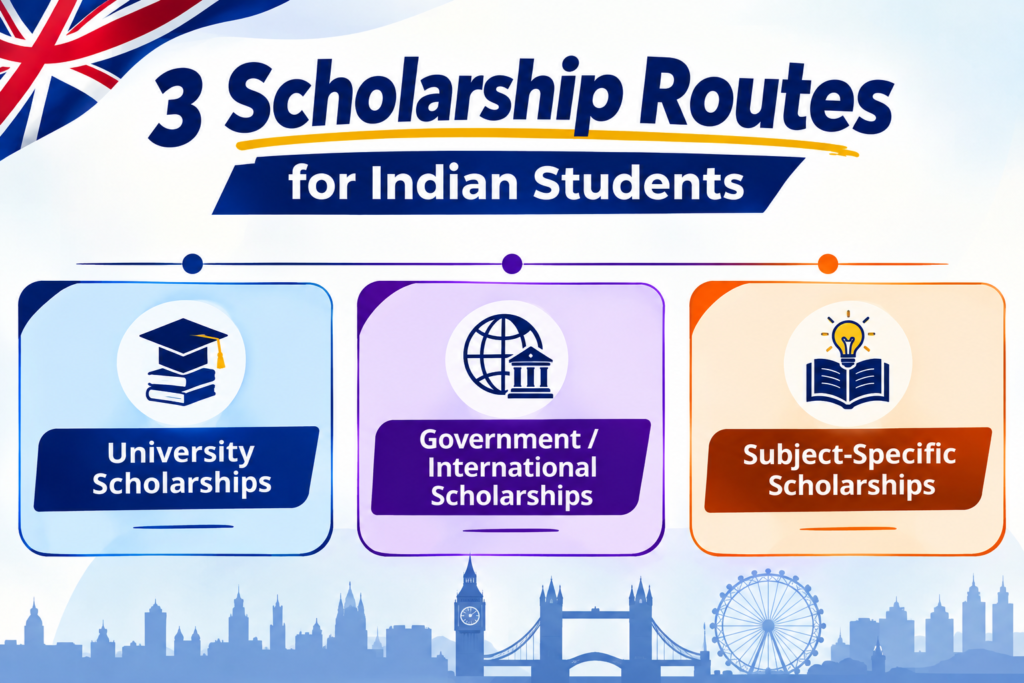
For students planning to pursue a master’s degree in the UK, well-known opportunities such as Chevening Scholarships, GREAT Scholarships, and Commonwealth Scholarships are worth exploring.
UK University Scholarships for Indian Students

Students should not focus only on major government-funded scholarships. Many UK universities offer their own scholarships and financial support for international students.
University scholarships may be based on factors such as:
- Academic achievement
- Nationality
- Subject or course
- Leadership
- Financial circumstances
- Career background
When shortlisting universities, check their international scholarships, postgraduate funding, merit-based awards, country-specific scholarships, bursaries, and tuition fee discounts.
Even if a scholarship does not cover all your expenses, a tuition fee reduction can significantly reduce the overall cost of studying in the UK.
What Does a Fully Funded UK Scholarship Mean?
The term “fully funded scholarship” is commonly searched by international students. However, fully funded does not necessarily mean that every expense will be covered in exactly the same way for every programme.
Depending on the scholarship, funding may include:
- Tuition fees
- Living expenses
- Travel support
- Other eligible study-related costs
Before accepting a scholarship, carefully check:
- Whether the full tuition fee is covered
- Whether a living allowance is provided
- Whether international travel is included
- Whether visa-related expenses are covered
- Whether accommodation receives separate support
- How long the funding continues
- Whether there are conditions attached
Understanding the funding terms in advance can help you avoid unexpected expenses later.
Master’s Scholarships UK: What Should Students Look For?
Students planning to pursue a master’s degree can explore several funding routes.
University Scholarships
Check the university where you intend to study. Some awards may be automatic, while others require a separate scholarship application.
Subject-specific scholarships
Some funding opportunities are linked to particular subjects or academic areas such as technology, engineering, business, public policy, development studies and arts.
Instead of relying on one opportunity, create a shortlist of scholarships that match your nationality, course, academic background and career goals..
Who Is Eligible for UK Scholarships?
There is no single eligibility rule for all UK scholarships for Indian students. Each scholarship has its own requirements.
Common criteria may include:
- Indian citizenship or residency requirements
- Undergraduate degree
- Academic performance
- Admission or offer from a UK university
- English-language requirements
- Work experience
- Leadership or extracurricular experience
- Course-specific requirements
- Career goals
- Financial circumstances
For example, Chevening currently requires eligible post-undergraduate work experience, while some university scholarships may focus more heavily on academic performance or course eligibility.
Therefore, students should always check the specific scholarship criteria rather than assuming they are eligible based on another student’s application.
How to Improve Your Chances of Getting a UK Scholarship
Scholarships can be highly competitive, so strong academic results alone may not always be enough.
Build a clear academic and career story
Your chosen master’s course should connect logically with your previous education and future goals.
Highlight relevant experience
Depending on the scholarship, internships, employment, volunteering, projects, student societies and community involvement may strengthen your application.
Be specific about your goals
Instead of simply saying that you want to “make a difference”, explain the specific problem you want to address and how your UK education will help you achieve your goals.
Make your application personal
The scholarship committee should understand why you are applying for that particular scholarship. Your application should reflect your own experience rather than sounding generic.

Common Mistakes to Avoid
Applying only for fully funded scholarships
Fully funded opportunities are attractive but often competitive. Also consider partial scholarships and university funding.
Ignoring university scholarships
Many students search for major scholarships but forget to check the university they plan to attend.
Missing deadlines
Scholarship deadlines can be different from university application deadlines. Always verify the latest deadline on the official scholarship website.
Using the same personal statement everywhere
A university personal statement and a scholarship application may have different purposes. Tailor your answers to each programme.
Trusting every scholarship advertisement online
Be cautious of websites promising guaranteed scholarships or asking for large payments to secure an award. Start with official university, government, British Council or scholarship organisation websites.
Can Fresh Graduates Get UK Scholarships?
Yes, depending on the scholarship.
Some programmes require work experience, while others focus more on academic achievement, course eligibility or other criteria.
For example, Chevening currently requires Indian applicants to have at least two years of eligible post-undergraduate work experience. Recent graduates without this experience should therefore explore university scholarships and other opportunities whose criteria match their profile.
When Should Indian Students Start Applying?
Students should begin scholarship research well before their intended intake.
A useful process is:
University and scholarship research → Shortlist → Eligibility check → Document preparation → Application writing → Review → Submission
For major programmes, applications can open months before the academic year begins. University scholarships may follow different timelines, so check each university individually.
A Simple Scholarship Strategy for Indian Students
Instead of depending on one scholarship, divide your applications into three groups:
Group 1 – Fully funded opportunities
Explore scholarships that may cover most or all eligible study costs.
Group 2 – Major partial scholarships
Look for scholarships that can significantly reduce tuition fees.
Group 3 – University funding
Check individual universities for merit awards, international student scholarships, bursaries and other financial support.
This approach gives you more opportunities to reduce your overall UK study costs.
Final Thoughts
There are many UK scholarships for Indian students, so start early and research carefully. Explore university scholarships along with Chevening, GREAT Scholarships and Commonwealth Scholarships.
Don’t focus only on fully funded options—partial scholarships can also reduce your overall study costs. Always check the official scholarship website for the latest eligibility, funding and deadlines before applying.